Why bookmakers’ mobile apps became the main tool for live betting
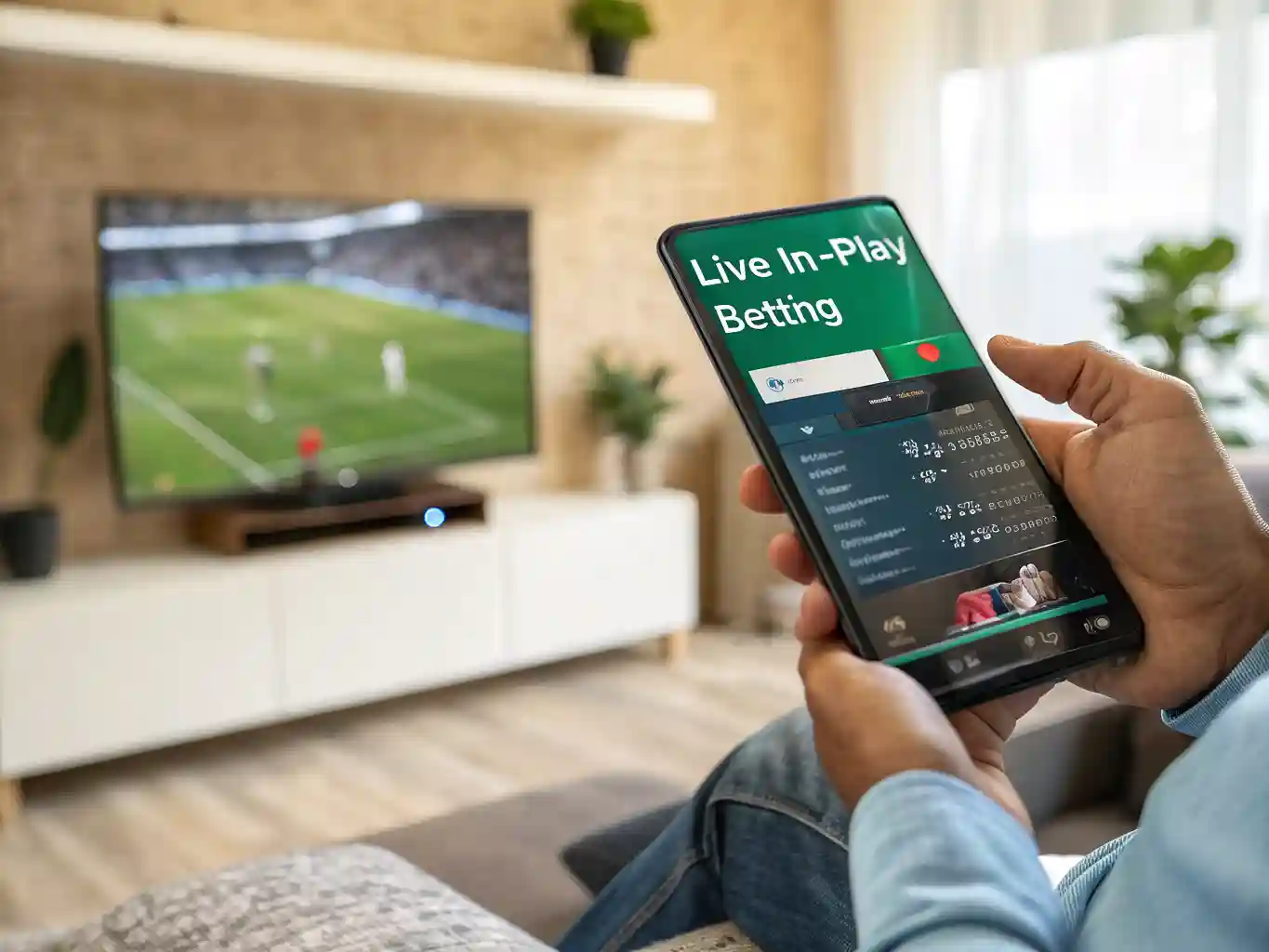
Live betting used to belong to the desktop screen. People would open several tabs, follow match trackers, refresh odds, and try to react before the market moved again. That model now feels outdated. The center of gravity has shifted to the smartphone, and the bookmaker’s mobile app has become the place where live betting actually happens.
This change is not only about convenience. It reflects a deeper change in user behavior. Sports fans no longer separate watching, checking statistics, chatting, and placing a bet into different moments of the day. All of it happens at once, often during short bursts of attention, and usually through a single device held in one hand. In that environment, the app is not just a smaller version of a betting site. It is a faster, more focused, and more practical tool built around the rhythm of live sports.
The popularity of mobile betting apps has grown because they solve a real problem: live markets move quickly, and the user needs speed, clarity, and control without friction. A bettor who has only a few seconds to respond to a red card, a tactical switch, a break point, or a late-game injury cannot afford slow page loads, awkward navigation, or payment steps that interrupt the moment. The app reduces that friction and turns betting into a more natural part of the live viewing experience.
At the same time, this shift says something important about modern audiences. People want tools that fit into real life, not tools that demand a special setting. They want to place a wager on the train, during halftime in a sports bar, while watching a second screen at home, or while following a game through live notifications when they are away from the TV. Mobile apps answer that demand better than mobile websites and far better than desktop platforms.
The rise of the bookmaker’s mobile app is therefore not a passing trend. It is the result of a practical advantage that users feel every time the game changes and the market reacts. The app wins because it is closer to the moment, closer to the user, and better adapted to the speed of live betting.
Live betting changed the way people interact with sports
The growth of live betting changed not only how bets are placed, but how matches are consumed. Traditional pre-match betting is built around preparation. The bettor studies form, lineups, injuries, and trends, then makes a decision before kickoff. Live betting works differently. It is tied to movement, momentum, and interpretation. A user is not only predicting an outcome but responding to a developing event.
That shift matters because it favors tools that can keep up with a changing situation. In live betting, timing can matter almost as much as judgment. Odds can tighten after a dangerous attack, drift after a missed chance, or disappear completely during a volatile moment. The bettor’s edge often comes from noticing something early and acting quickly. That makes the quality of the interface a major part of the overall betting experience.
Mobile apps are better suited to this environment because they are designed for immediate action. A good app allows the user to open the market, scan the available options, place a bet, and return to the live event in seconds. That smooth sequence fits the mental tempo of live betting. There is no need to open a browser, re-enter credentials, or struggle with a layout that feels crowded on a small screen.
There is also a behavioral reason why apps took over. Modern sports fans already consume live events in a fragmented way. Some watch the full game on television. Others follow it through streaming, score apps, social media clips, and stat feeds. Many combine all of these at once. The bookmaker’s app fits naturally into that multitasking environment because it lives where the user’s attention already lives: on the phone.
The smartphone is always within reach, and that changes the relationship between the user and the market. Betting becomes less of a separate activity and more of an extension of following the game. A push notification can bring a user back in seconds. A saved payment method can remove hesitation. A clean app interface can make a fast decision feel manageable even in a chaotic match situation.
This is one of the main reasons mobile apps became central to live betting. They match the rhythm of modern sports engagement more accurately than older betting formats ever could. The app does not ask the user to stop what they are doing and switch to a betting session. It joins the session that is already happening.
Speed and interface quality make the difference in live markets
In live betting, small delays can have a real effect on user results. A market that looks available can suspend in an instant. A price can move before the bet is confirmed. A user who needs three extra taps to find a market may miss the moment entirely. This is where mobile apps gained a serious advantage over browser-based betting.
Apps are generally built to reduce load times, simplify repeated actions, and keep the most important features within easy reach. When a bettor opens a strong mobile app, the homepage often highlights live events immediately. Popular markets are grouped clearly. Navigation is optimized for thumb movement rather than desktop logic. The bet slip is accessible without hiding the event view. Deposit options, cash-out tools, and open bets are usually integrated in a way that feels direct rather than layered.
That design matters because live betting is not a calm activity. Users often make decisions while watching a match, speaking to friends, reading stats, or moving between locations. In those conditions, cognitive overload is a real problem. If the interface is cluttered, if the fonts are too small, or if the market structure is confusing, the app creates stress at the exact moment when the user needs clarity.
The best betting apps succeed because they reduce decision friction. They do not necessarily make the bettor smarter, but they allow the bettor to act on their judgment with less delay. That practical benefit is often more important than flashy design. Users do not stay loyal to a betting app because it looks modern in screenshots. They stay loyal because it performs well when a match becomes unpredictable.
A few interface qualities are especially important in live betting:
• Fast event loading and minimal delay between screens.
• Clear market grouping for major and secondary options.
• Stable bet slip behavior during price updates.
• Quick access to cash out, open bets, and balance.
• Readable odds and live match information on a small screen.
These features sound simple, but together they shape trust. A bettor needs to feel that the app is not fighting against the decision-making process. When the interface is reliable, the user feels more in control. That sense of control has become one of the strongest selling points of the mobile betting app era.
Before comparing the main advantages more directly, it helps to look at how the mobile app performs against other betting formats in the areas that matter most during a live event.
| Feature | Mobile app | Mobile browser | Desktop site |
|---|---|---|---|
| Access speed | Very fast after login or biometric entry | Often slower due to browser steps | Fast when already open, slower when away from desk |
| Ease of navigation during live play | Optimized for touch and quick taps | Can feel cramped or less responsive | Strong visibility, but less practical on the move |
| Push notifications | Full support | Limited or inconsistent | Not central to the experience |
| One-handed use | Strong | Moderate | Poor |
| Payment convenience | High with saved methods and wallet tools | Moderate | High, but less mobile |
| Use during travel or outside home | Excellent | Good | Weak |
| Multitasking with other apps | Easy | Easy | Less natural in real-world situations |
The table makes the core point clear: the mobile app wins not because desktop has disappeared, but because live betting favors immediacy, portability, and repeated short interactions. The app is built around those needs in a way the other formats can only partly match.
Notifications, personalization, and habit formation strengthened app loyalty
Another reason mobile betting apps became the main tool for live wagering is that they are not passive platforms. They actively bring the user back. This is a major difference from traditional betting websites, which depend more heavily on the user deciding to return on their own.
Push notifications changed the relationship between sportsbook and bettor. A user can receive updates about match starts, goals, odds boosts, cash-out opportunities, or favorite teams. When used well, these notifications reduce the distance between live sports action and betting action. They also create a habit loop. The user no longer has to remember to check the app. The app becomes part of the user’s sports routine.
Personalization has also improved the effectiveness of mobile apps. Many bookmakers now organize the interface around recent behavior, preferred sports, saved leagues, and commonly used market types. A football bettor who regularly plays corners, cards, or next-goal markets may see those options more prominently. A tennis user may get faster access to set betting, game markets, and break-related opportunities. This makes the app feel less like a broad catalog and more like a personal betting dashboard.
That level of customization matters in live betting because it saves time and reduces noise. A user does not want to dig through dozens of irrelevant markets while the match moves on. The more relevant the app feels, the more useful it becomes during time-sensitive moments. This is especially important for experienced bettors who know what they are looking for and want the shortest route possible.
There is also an emotional side to app loyalty. Mobile apps create continuity. Open bets, match trackers, account balance, responsible gambling settings, and preferred leagues all live in one place. The user becomes familiar with the rhythm of that environment. Over time, this familiarity creates confidence, and confidence encourages repeated use.
The strongest apps do not rely only on marketing bonuses to keep attention. They build a routine around usability. Users return because the app feels dependable, quick, and tailored to their habits. That is far more powerful over the long term than a short promotional campaign.
Mobile apps fit real-life betting behavior better than desktop ever could
The practical dominance of mobile apps becomes even clearer when we look at how people actually bet in daily life. Most bettors are not sitting at a desk with a spreadsheet and a large monitor every time they place a live wager. They are in motion. They are switching between tasks. They are following games in imperfect conditions, often with limited time and divided attention.
That reality favors the smartphone by default. It is already the device people use to message friends, read lineups, check social media reactions, watch clips, and monitor scores. Betting moved onto the same device because that is where sports attention already flows. The bookmaker’s app benefits from that ecosystem effect.
The live betting session today is often built around moments like these:
• A fan watches the first half on television and places a second-half bet during the break.
• A commuter follows a tennis match through stats and enters the market after a momentum swing.
• A bettor in a bar checks card and corner markets without interrupting the social setting.
• A user receives a price alert, opens the app, and places a wager in under a minute.
These are not edge cases. They describe the normal environment of modern betting. The phone is central because it is flexible enough to serve both casual and highly engaged users. It supports short sessions, repeated checks, and quick reactions without forcing the user into a formal setup.
There is another important point here: mobile apps reduce the gap between interest and action. A desktop session usually requires intent. The user has to decide to sit down and visit the sportsbook. A mobile app shortens that path. A moment of curiosity can become a bet almost instantly. That does not automatically make the decision better, but it does explain why app usage is so high. The barrier to entry is lower, and the process feels natural.
This convenience has made the mobile app the main tool for live betting, but it also places a greater responsibility on operators to support healthy user behavior. Good apps now include deposit limits, session reminders, time-outs, and clearer account controls because the same convenience that makes live betting attractive can also make it easier to act impulsively. The best products understand that user trust depends not only on speed, but on control.
Better payment flows and account management improved the full experience
Betting apps became dominant not only because they are good at market access, but because they improved the entire process around betting. A live wager does not exist in isolation. It depends on account management, deposits, withdrawals, verification, and balance awareness. The smoother those elements become, the more attractive the platform feels during fast-moving sports action.
Mobile apps simplified this environment in important ways. Biometric login reduced password friction. Saved payment methods made deposits quicker. Wallet integrations and faster cashier design helped users move funds without leaving the app or repeating unnecessary steps. Verification features became easier to complete through camera upload and in-app prompts rather than desktop-heavy document workflows.
This matters more than it may appear. A user who wants to place a live bet after spotting value does not want to discover that the account needs a long login sequence or a clumsy deposit path. Every interruption weakens the momentum of the experience. The app’s advantage is that it can keep everything connected in one compact environment.
Modern betting apps also give users better visibility over their activity. Open bets, settled bets, bonus status, transaction history, and account tools are usually available in a cleaner structure than before. For many users, especially newer ones, that clarity reduces anxiety. It helps them understand where they stand without leaving the live match flow.
A well-built app can also support more disciplined betting. Seeing balance, open exposure, and recent activity in a single place encourages better awareness. Some users become more structured when the interface makes spending and stake size easier to track. That is not guaranteed, but the possibility is stronger when the account system is transparent.
This full-service quality is one reason apps overtook the idea of being just a convenient side option. They are no longer accessories to the bookmaker’s website. In many cases, they are the main product, with the desktop site serving as a secondary channel.
The future of live betting will be shaped around the app first
Everything points in the same direction: future live betting innovation will be designed with the mobile app at the center. That is where user attention is strongest, where data can be delivered fastest, and where operators can combine betting, media, alerts, and account tools in one environment.
This app-first future is likely to bring even tighter integration between live data and user action. Faster visual match trackers, smarter personalization, cleaner same-game live bet building, and more advanced streaming support are all natural next steps. The strongest apps will probably become more selective, not more cluttered. They will aim to show the right information at the right moment rather than overwhelm the user with endless options.
Artificial intelligence and predictive interfaces may also shape the next phase, but the core principle is unlikely to change. Users will continue choosing the platform that helps them react quickly, understand the market, and manage their account without friction. That remains the app’s strongest position.
At the same time, the future will not belong to speed alone. Trust, stability, and responsible design will matter just as much. The more central the app becomes to live betting, the more users will expect it to be transparent, secure, and easy to control. Operators that focus only on retention tricks without respecting user experience may still attract attention, but they will struggle to build lasting loyalty.
The bookmaker’s mobile app became the main tool for live betting because it fits the real shape of modern sports engagement. It is immediate without being bulky, flexible without being shallow, and practical in the moments when timing matters most. It allows betting to sit inside the live sports experience instead of outside it.
That is the real reason for its success. The app did not win because it was fashionable. It won because it solved the problem better. In a market defined by pace, movement, and short windows of opportunity, the best tool is the one that stays close to the action. Today, that tool is the mobile app.